
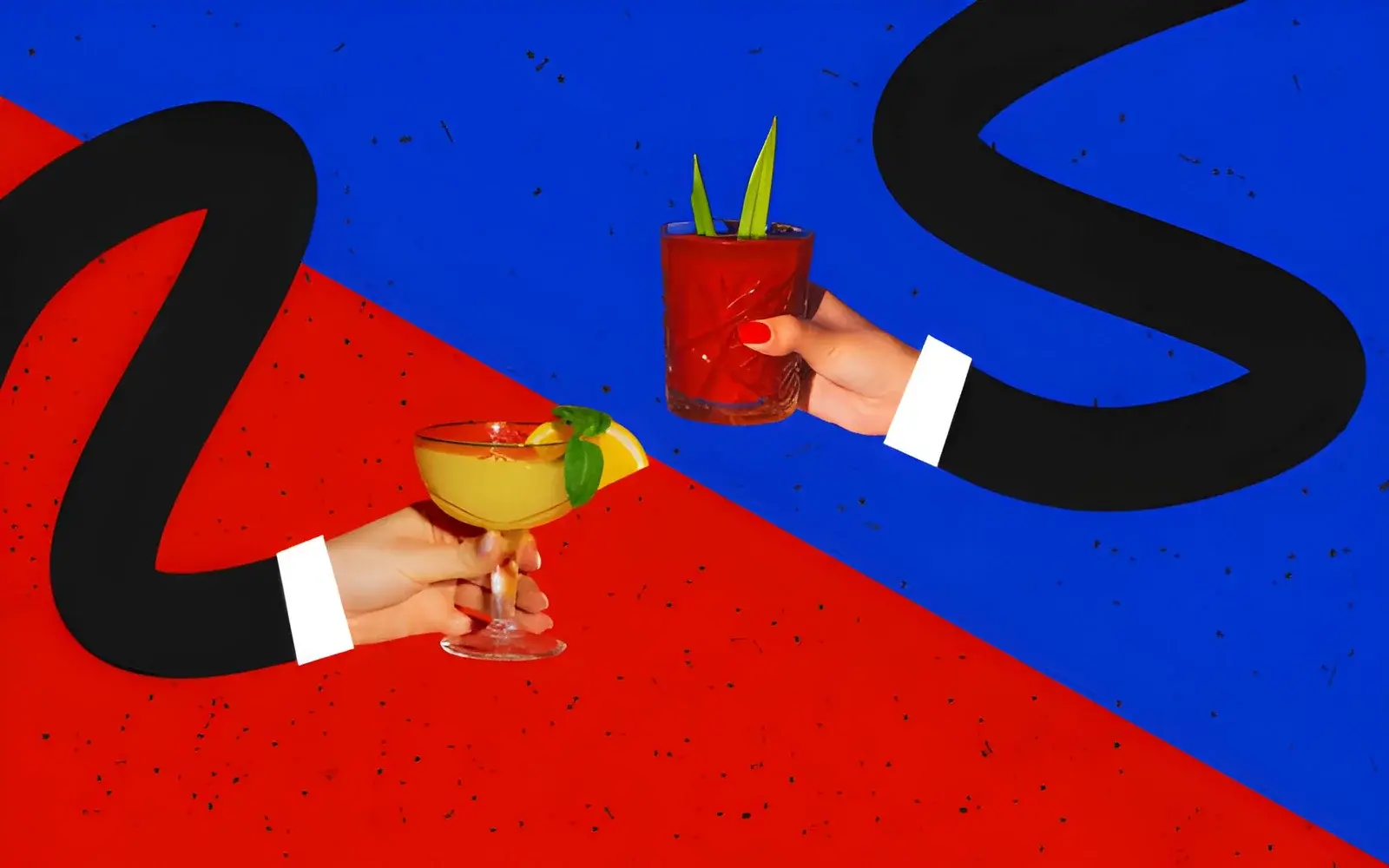
Order a drink without alcohol and there is a fair chance the name will be doing some extra work. A minty lime soda becomes a “Nojito.” A rum-free version turns into a “Faux-jito.” The drink is simple, but the name winks at you, as if to say it knows exactly what it is not.
That little bit of wordplay is showing up at a time when Americans are rethinking how much they drink. According to Gallup, the share of U.S. adults who say they drink alcohol sat at a record-low 54% in 2025 and stayed there in 2026, down from 62% in 2023. Gallup notes the decline has come as concern about alcohol’s health effects has grown. In its 2026 survey, 51% of adults said that drinking one or two alcoholic drinks a day is bad for your health.
People cut back for different reasons, and not everyone finds it easy. Some simply swap one glass for a soda water with lime. Others are following research into the biology of drinking, including early findings on GLP-1 addiction treatment, a new area that asks whether medicines first developed for diabetes and weight loss might help people who struggle to drink less. Either way, the drinks people choose instead need names, and those names keep turning into puns.
The Pun Was There From the Start
The best-known word in this whole category is itself a piece of wordplay. “Mocktail” blends “mock,” meaning imitation, with “cocktail.” Merriam-Webster defines it as “a nonalcoholic cocktail” and dates its first known use to 1916. So the joke is more than a century old, and it has held up well.
What has changed is how far the joke now reaches. “Mocktail” set the template: take a familiar drink name, bend one sound, and let the listener do the rest. Nojito and Faux-jito follow the same rule. You hear “mojito,” you notice the twist, and you understand the drink without anyone spelling it out.
Why Wordplay Fits the Zero-Proof Glass So Well
Puns are not the only way to label a drink, but they solve several small problems at once. A plain description like “lime and mint soda” is accurate and forgettable. A pun signals what the drink is modeled on, tells you it is alcohol-free, and adds some fun to the order. Here is why the format keeps working.
- Instant recognition: A pun borrows a name people already know, so a “Faux-jito” calls up the taste of a mojito before you have read the ingredients.
- A clear signal: Words like “no,” “faux,” and “mock” tell you right away that the alcohol is missing, which saves an awkward question at the bar.
- Less pressure: A playful name keeps the focus on the drink rather than on why someone is skipping alcohol, and that can make the choice feel ordinary.
- Easy to remember: A twist on a familiar word tends to stick, which is handy when you want to order the same thing again.
- Room for creativity: Bartenders and home cooks get a small creative outlet, since the name becomes part of the drink’s personality.
Put together, these reasons explain why a pun often does a better job than a straight description. It is short and friendly, and it lets the drink stand next to the alcoholic version on equal terms instead of looking like a consolation prize.
The Numbers Behind All the Wordplay
The names are fun, but there is real demand behind them. In its 2026 survey, Gallup found that 17% of U.S. adults had chosen nonalcoholic beer, wine, or spirits instead of alcohol at some point in the past year. That included 20% of drinkers and 14% of non-drinkers. Among drinkers who use these products, 38% said they were drinking more of them than before, compared with 17% who said they were drinking less.
Retail data points the same way. NielsenIQ reported that off-premise sales of nonalcoholic beer, wine, and spirits in the United States reached about $925 million in the 52 weeks ending August 2, 2025, up 21.9% from the year before. That is still a small slice of the alcohol aisle, about 0.8% of total alcohol sales by NielsenIQ’s count, but it is growing quickly. When a category grows like that, its products need names that grab attention on a menu or a shelf, and wordplay is a cheap, effective way to do it.
Where Medicine Enters the Conversation
A clever drink name helps with a social moment. It does not change how the brain responds to alcohol, and for some people cutting back takes more than a good substitute. That is why researchers are looking at medicine as well as menus.
One study drew particular attention. In February 2025, a team led by Christian Hendershot at the University of Southern California published a randomized, placebo-controlled trial in JAMA Psychiatry. The study followed 48 adults with alcohol use disorder who were not seeking treatment. Over nine weeks, participants received weekly low-dose injections of semaglutide, the drug sold as Ozempic, or a placebo. The semaglutide group reported less craving and fewer drinks on the days they drank. Nearly 40% of that group reported no heavy drinking days in the final month, compared with 20% of the placebo group.
The researchers were careful about what this means. Hendershot said the results justify larger studies, and senior author Klara Klein of the University of North Carolina School of Medicine noted that bigger and longer studies in broader groups are needed to understand safety and effectiveness. GLP-1 medicines are not FDA-approved for treating alcohol use disorder, so for now this remains a research question rather than a standard treatment.
Coining a Pun Name of Your Own
If you want to name an alcohol-free drink yourself, the recipe is the same one “mocktail” used more than a hundred years ago. Start with a classic drink name, find the sound you can swap, and choose a swap that hints at “no,” “not,” or “fake.” The names below are our own made-up examples to show the pattern, not drinks from any particular menu.
An alcohol-free piña colada could become a “Piña Nada.” A ginger and lime mule without vodka might be a “Mule-ish.” An alcohol-free spritz could be a “Spritz-ish,” and a fruity punch with no wine could pass as a “Sangri-nah.” Some work better out loud than in print, so try saying them before writing them on the chalkboard.
The main rule is clarity. A good pun name should tell a guest within a second that the drink contains no alcohol. If people have to ask, the joke has gone a step too far.
Frequently Asked Questions (FAQs)
1. Is “mocktail” really a pun?
Yes. It combines “mock,” meaning imitation, with “cocktail.” Merriam-Webster defines it as a nonalcoholic cocktail and records its first known use in 1916, which means the wordplay is more than a century old.
2. Are Nojito and Faux-jito real drink names?
They are wordplay on “mojito” used to describe a mojito-style drink without rum. Names like these are informal and can vary from one bar or home kitchen to the next, so the ingredients behind them are not standardized. If you want to be sure a drink has no alcohol, ask how it is made.
3. Can GLP-1 medicines be prescribed to help people drink less?
GLP-1 medicines such as semaglutide are not FDA-approved for alcohol use disorder. A small 2025 trial in JAMA Psychiatry found that semaglutide reduced craving and some measures of drinking compared with placebo in a trial of 48 adults over nine weeks, but the researchers said larger and longer studies are needed. Anyone curious about medication for drinking should talk it through with a doctor.
Also Read
- IMAO Meaning in Text: What Does IMAO Mean?
- RLS Meaning in Text: What It Means, and How to Use It
- Zesty Meaning: Definition, and Real-Life Examples (2026 Guide)
